Chinese American Mid-autumn Family Celebration Children's Books Age 6-12
Chinese Civilization: Customs & Traditions of China
Cathay is an extremely large country — first in population and fifth in area, according to the CIA — and the community and traditions of its people vary by geography and ethnicity.
Nigh 1.4 billion people alive in China, according to the World Bank, representing 56 ethnic minority groups. The largest group is the Han Chinese, with almost 900 million people. Other groups include the Tibetans, the Mongols, the Manchus, the Naxi, and the Hezhen, which is smallest group, with fewer than 2,000 people.
"Significantly, individuals inside communities create their own culture," said Cristina De Rossi, an anthropologist at Barnet and Southgate College in London. Culture includes religion, food, style, language, marriage, music, morals and many other things that make up how a group acts and interacts. Here is a cursory overview of some elements of the Chinese culture.
Religion
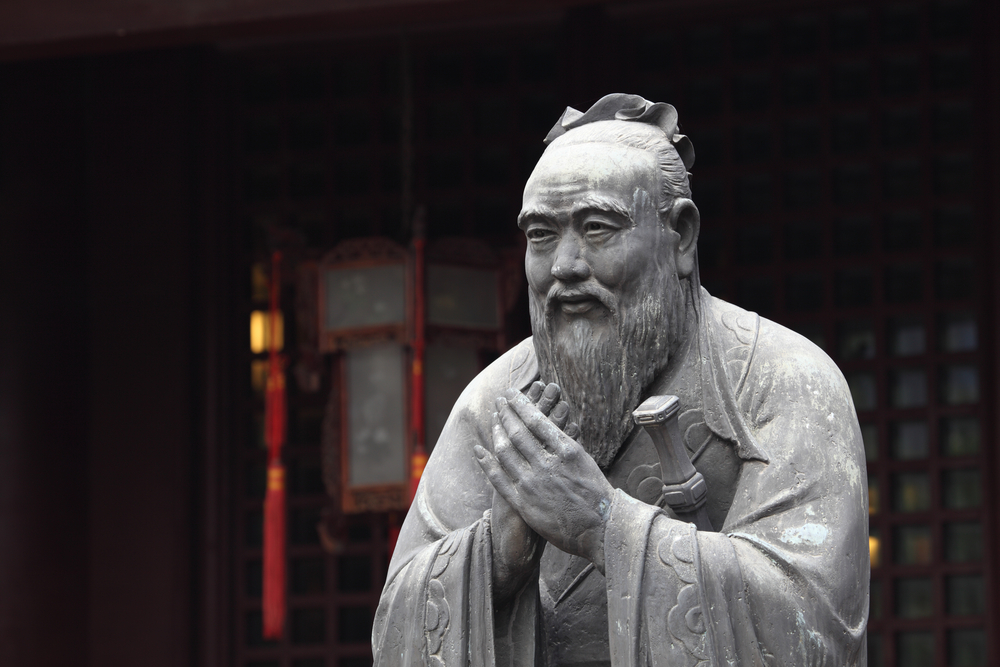
The Chinese Communist Party that rules the nation is officially atheist, though it is gradually becoming more than tolerant of religions, according to the Council on Strange Relations. Currently, there are just five official religions. Any faith other than Buddhism, Taoism, Islam, Catholicism and Protestantism are illegal, even though the Chinese constitution states that people are allowed liberty of religion. The gradual tolerance of religion has only started to progress in the past few decades.
Near a quarter of the people exercise Taoism and Confucianism and other traditional religions. At that place are besides small-scale numbers of Buddhists, Muslims and Christians. Although numerous Protestant and Catholic ministries have been agile in the country since the early on 19th century, they accept made little progress in converting Chinese to these religions.
The cremated remains of someone who may have been the Buddha were discovered in Jingchuan County, Communist china, with more than than 260 Buddhist statues in belatedly 2017. Buddha was a spiritual teacher who lived between mid-6th and mid-4th centuries B.C. His lessons founded Buddhism. [Cremated Remains of the 'Buddha' Discovered in Chinese Village]
Linguistic communication
At that place are seven major groups of dialects of the Chinese language, which each have their own variations, co-ordinate to Mountain Holyoke College. Mandarin dialects are spoken by 71.5 percent of the population, followed by Wu (8.v percentage), Yue (besides called Cantonese; 5 percent), Xiang (4.eight percent), Min (4.1 percent), Hakka (3.seven percent) and Gan (two.4 per centum).
Chinese dialects are very unlike, according to Jerry Norman, a former professor of linguistics at the Academy of Washington and author of "Chinese (Cambridge Language Surveys)" (Cambridge University Printing, 1988). "Chinese is rather more similar a linguistic communication family than a unmarried linguistic communication made up of a number of regional forms," he wrote. "The Chinese dialectal complex is in many means analogous to the Romance language family in Europe. To have an extreme example, in that location is probably as much difference betwixt the dialects of Peking [Beijing] and Chaozhou as in that location is between Italian and French."
The official national linguistic communication of China is Pŭtōnghuà, a type of Mandarin spoken in the capital Beijing, according to the Club of the President of the People's Republic of China. Many Chinese are also fluent in English language.
Food
Like other aspects of Chinese life, cuisine is heavily influenced by geography and ethnic diversity. Amid the main styles of Chinese cooking are Cantonese, which features stir-fried dishes, and Szechuan, which relies heavily on utilize of peanuts, sesame paste and ginger and is known for its spiciness.
Rice is not only a major food source in China; it is besides a major element that helped grow their society, according to "Pathways to Asian Civilizations: Tracing the Origins and Spread of Rice and Rice Cultures," an 2011 article in the journal Rice by Dorian Q. Fuller. The Chinese give-and-take for rice is fan, which also ways "meal," and it is a staple of their diet, as are bean sprouts, cabbage and scallions. Because they exercise non swallow a lot of meat — occasionally pork or chicken — tofu is a main source of protein for the Chinese.
The arts
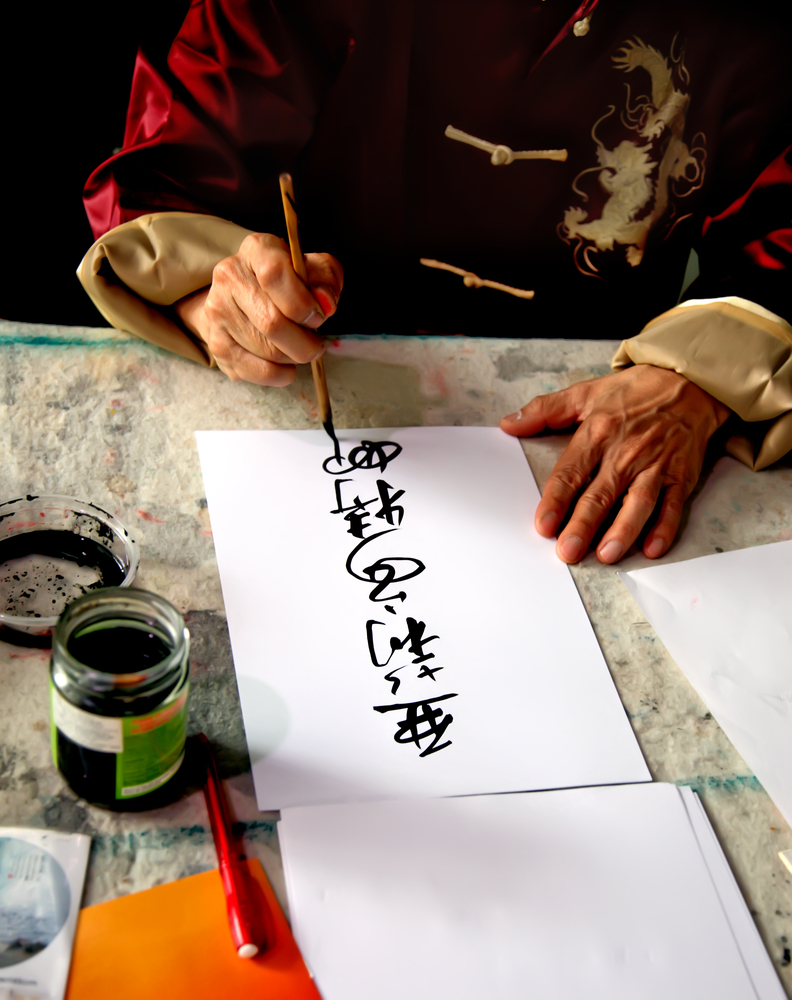
Chinese art is greatly influenced past the country's rich spiritual and mystical history. Many sculptures and paintings depict spiritual figures of Buddhism, co-ordinate to the Metropolitan Museum of Art.
Many musical instruments are integral to Chinese culture, including the flute-like xun and the guqin, which is in the zither family unit.
Eastern-way martial arts were likewise developed in Mainland china, and it is the birthplace of kung fu. This fighting technique is based on animate being movements and was created in the mid-1600s, according to Black Belt Mag.
Aboriginal Chinese were avid writers and philosophers — especially during the Ming and Qing dynasties — and that is reflected in the state's rich liturgical history.
Recently, archaeologists discovered detailed paintings in a 1,400-year-erstwhile tomb in People's republic of china. "The murals of this tomb had diversified motifs and rich connotations, many of which cannot be plant in other tombs of the same period," a squad of archaeologists wrote in an article recently published in a 2017 issue of the journal Chinese Archæology. [Aboriginal Tomb with 'Blueish Monster' Landscape Discovered in China]
Science & technology
China has invested big amounts of money in scientific discipline advancements and currently challenges the United States in scientific inquiry. China spent 75 percent of what the United States spent in 2015, according to the periodical JCI Insight.
One contempo 2017 development in Chinese science is teleportation. Chinese researchers sent a packet of information from Tibet to a satellite in orbit, up to 870 miles (ane,400 kilometers) above the Earth's surface, which is a new record for quantum teleportation distance. [Chinese Scientists Merely Gear up the Record for the Farthest Quantum Teleportation]
Some other 2017 advancement is the development of new bullet trains. Dubbed "Fuxing," which means "rejuvenation," these trains are loftier-speed transportation systems that run betwixt Beijing and Shanghai. The trains can travel at speeds of up to 350 km/h (217 mph), making them the earth's fastest trains. [China's 'Rejuvenation' Bullet Trains Are the World's Fastest]
Customs and celebrations
The largest festival — also chosen the Spring Festival — marks the start of the Lunar New year's day. Information technology falls between mid-Jan and mid-Feb and is a time to accolade ancestors. During the 15-solar day celebration, the Chinese do something every day to welcome the new year's day, such as eat rice congee and mustard greens to cleanse the trunk, according to the Academy of Victoria. The holiday is marked with fireworks and parades featuring dancers dressed as dragons.
Many people make pilgrimages to Confucius' birthplace in Shandong Province on his birthday, Sept. 28. The birthday of Guanyin, the goddess of mercy, is observed by visiting Taoist temples. It falls between late March and late April. Similar celebrations mark the birthday of Mazu, the goddess of the body of water (also known as Tianhou), in May or June. The Moon Festival is celebrated in September or October with fireworks, paper lanterns and moon gazing.
Boosted resources
- Princeton University: The Spirits of Chinese Religion
- University of Mississippi: Ming and Qing Dynasties
- University of Minnesota: What is Civilization?
Source: https://www.livescience.com/28823-chinese-culture.html
0 Response to "Chinese American Mid-autumn Family Celebration Children's Books Age 6-12"
Post a Comment